North Texas Weekly
Everything is Opportunity
Wedding Programs: What to Include and How to Design Them
Athena C.
5/11/26

Wedding programs help guests follow the ceremony, introduce the wedding party, and add a small keepsake element to the day, though not every wedding needs one. This guide covers what typically goes into a program and how to decide whether yours is worth the additional cost and effort.
What to Include in a Wedding Program
Order of ceremony — processional, readings, vows, ring exchange, pronouncement, recessional
Wedding party names — with their relationship to the couple
Names of officiant and any readers — acknowledging their role in the ceremony
A note of thanks — to parents, guests, or anyone who helped make the day possible
Any explanation of unique rituals — particularly helpful if blending cultural or religious traditions guests may not be familiar with
Does Your Wedding Actually Need a Program?
A short, straightforward ceremony with a small guest list who already knows the wedding party may not need a formal program at all. Programs add the most value for longer ceremonies, blended religious or cultural traditions, or a large guest list with many attendees who do not know each other or the wedding party.
Common Program Formats
Single-page cards — simple and cost-effective, good for shorter ceremonies
Folded booklets — more space for detail, well suited to longer or multi-part ceremonies
Fans — a practical dual-purpose option for outdoor summer ceremonies
Large format signage — a single displayed program near the entrance instead of individual handouts
Designing a Cohesive Program
Match your program's design to your invitation suite's fonts, colors, and overall style for a cohesive look throughout the day. Many stationery designers on Minted or Etsy offer matching program templates alongside their invitation suites specifically for this reason.
Who Distributes Programs and When
Programs are typically handed out by ushers or groomsmen as guests arrive and are seated, or placed directly on each seat before guests arrive. Assign this task clearly to a specific person or group ahead of time so it does not get overlooked amid other pre-ceremony logistics.
A quick reminder to whoever is distributing programs, sent the morning of the wedding, helps ensure the task actually happens amid the busyness of final preparations.
Budget-Friendly Program Alternatives
A single large-format program displayed on an easel near the ceremony entrance, rather than individual handouts for every guest, meaningfully reduces printing costs while still providing the same information. This approach works particularly well for smaller guest counts where individual programs feel like an unnecessary expense.
Incorporating Programs Into Your Overall Décor
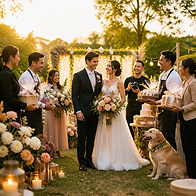
Some couples use programs as an additional decorative element, tying them into the ceremony's overall color scheme and displayed in a styled basket or holder near the entrance rather than handed out individually. This approach doubles the program as a design element while still serving its informational purpose.
A well-styled program display can also serve as an attractive photo backdrop for guests arriving early, adding a small additional visual touch to the ceremony space.
Multilingual or Bilingual Programs
For weddings blending multiple languages or cultural traditions, a bilingual program helps ensure every guest can follow along regardless of their primary language. This is particularly thoughtful for family members who may not be fluent in the ceremony's primary language.
Timing Program Distribution With the Ceremony Schedule
Ensure programs are fully distributed before the processional begins, since handing them out mid-ceremony creates a distracting disruption. Coordinate with your ushers or greeters on exactly when to stop distributing and take their own seats before the ceremony officially starts.
A brief walkthrough with your ushers the day before, covering exactly this timing, prevents confusion in the moment when nerves and excitement can make simple logistics harder to remember.
Working Programs Into Your Overall Stationery Budget
Programs are typically one of the smaller line items in an overall stationery budget, particularly compared to invitations or save-the-dates, making them a reasonable place to add a nice touch without significantly affecting your total spend. Simple, well-designed programs can look just as polished as elaborate ones at a fraction of the cost.
Ordering the Right Quantity
Order roughly one program per couple or family group rather than one per individual guest, since many guests attend and sit together and do not each need a separate copy. Add a modest buffer beyond this estimate to account for keepsake requests and any last-minute guest additions.
Considering a Program as a Memento
Beyond its functional role during the ceremony, a thoughtfully designed program often becomes a keepsake guests take home, particularly if it includes a meaningful photo or a personal note from the couple. This is worth factoring into your design decision even if the ceremony itself would not strictly require a program.
Proofreading Programs Before Printing
Double-check every name, especially in the wedding party listing and any acknowledgments section, since these are the most personal and most noticeable details if an error slips through. Ask a family member familiar with everyone's names and correct spellings to do a final review before sending the file to print.
Coordinating Program Design With Your Officiant
Share your draft order of ceremony with your officiant before finalizing the program, since they may adjust the sequence or add an element you had not initially planned for. This coordination prevents a mismatch between what is printed and what actually happens during the ceremony itself.
Choosing a Font That Photographs Well
Programs are frequently photographed as a detail shot by wedding photographers, so choosing a font that is both stylish and genuinely legible pays off in your final photo gallery, not just in the guest's hands during the ceremony itself and the moments captured around it.
Frequently Asked Questions
Do we really need a wedding program?
Not necessarily — shorter, simpler ceremonies with a guest list that already knows the wedding party often skip programs without any negative impact on the guest experience. They add the most value for longer, more complex, or culturally blended ceremonies.
How far in advance should we order wedding programs?
Order programs around the same time as your final invitation details are locked in, typically six to eight weeks before the wedding, allowing time for proofing, printing, and any necessary corrections before the ceremony.
Can programs double as another useful item, like a fan?
Yes — fan-style programs are popular for warm-weather or outdoor ceremonies specifically because they serve a practical purpose beyond just conveying information, giving guests something functional to do with the printed piece afterward.
Should we include song titles and readings word-for-word in the program?
Song and reading titles are commonly included, but full lyrics or reading text are usually omitted to keep the program a reasonable length, unless a specific reading is short and meaningful enough to include in full.
Who typically pays for wedding programs?
Programs are usually included as part of the overall stationery budget, typically handled by whichever party is managing invitations and other printed materials, though this varies by family and cost-splitting arrangement.
Can programs include a memorial note for a deceased family member?
Yes, this is a common and touching addition, typically a brief line acknowledging a parent, grandparent, or other loved one who could not be present, often placed near the bottom of the program or within the order of ceremony.